Stiff Lower Back From Sitting? Check Your Hips First
When the hips stop moving, the lower back often picks up the slack. Three quick hip checks, a short routine to free and strengthen them, and when to see someone.
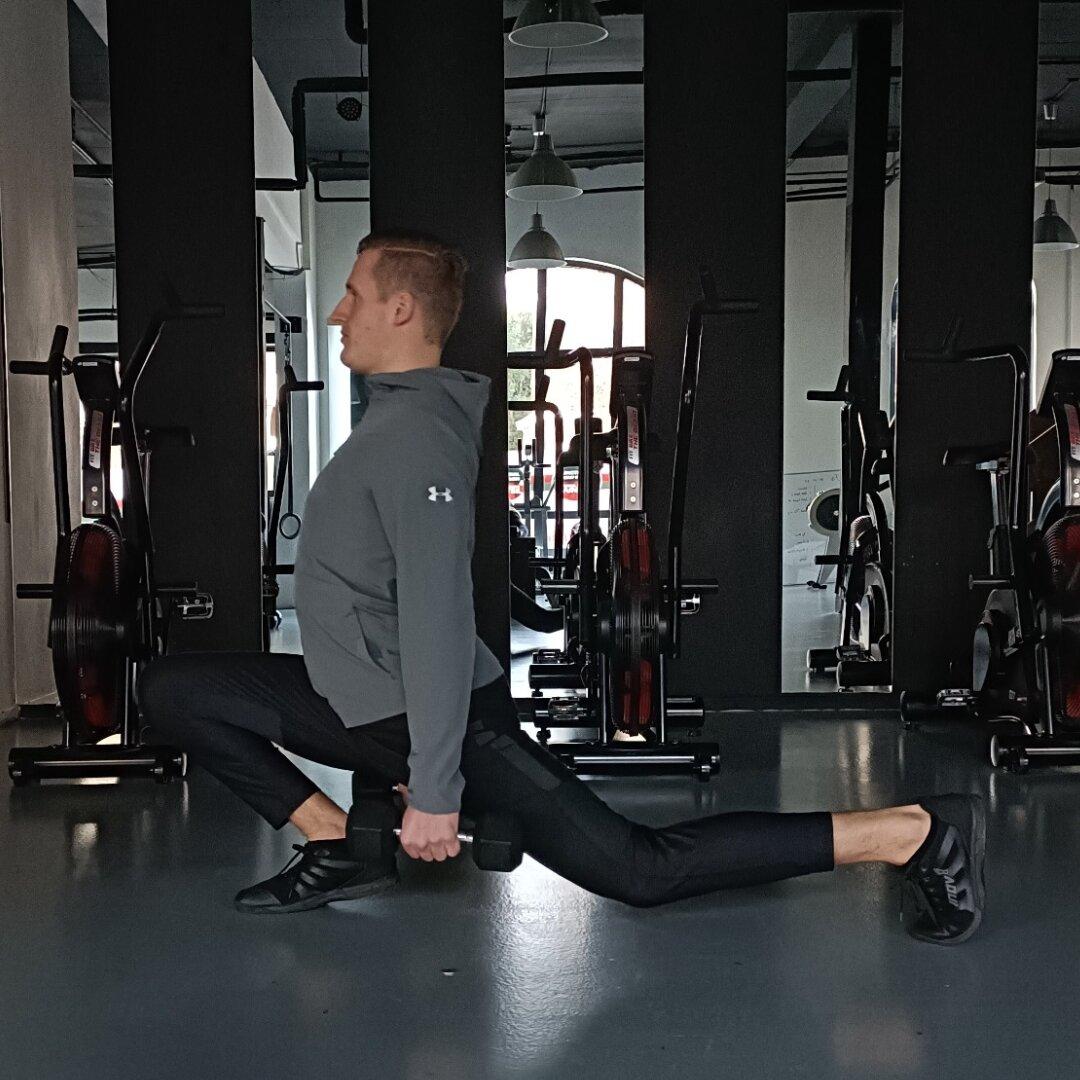
In shortWhen your lower back feels stiff after a day of sitting, the hips are often part of the story. Hours in a chair keep the hips in one position, and when they stop moving well the lower back tends to move more to make up for it. Testing, freeing and strengthening the hips is a good place to start.
Daniël, who founded Move More Human, started with this exact problem. Years of sitting, a lower back that ached, and he couldn't touch his toes. Working on his back didn't change much. What changed it, for him, was the hips: releasing the muscles around them, getting them moving through their full range again, and then making them strong in that range.
That's one person's story, not a rule. Back pain has many causes. But the hips are worth checking for almost anyone who sits for a living, and it takes about ten minutes to find out where yours stand.
Your hips are built to move in every direction
The hip is a ball-and-socket joint. It can bend, extend, open out to the side, cross in, and rotate both ways. Now picture a desk day: hips bent at roughly ninety degrees, legs parallel, for hours. One position out of many.
Do that most days and the hips get comfortable in that one position and less used to all the others. Your body is good at finding range somewhere else. When the hips stop moving well, the lower back often moves more to make up for it, every time you bend down, twist, or take a long stride.
Three quick hip checks
- 01Toe touch: stand tall, knees soft, fold forward. Do your fingertips reach your shins, ankles or the floor? Does the bend come mostly from the hips, or mostly from rounding your back?
- 0290/90 sit: sit on the floor with one leg bent in front of you and the other bent out to the side, both knees at about ninety degrees. Can you sit up tall without leaning on your hands? Swap sides. Is one side harder?
- 03Deep squat: feet about shoulder width, sink as low as you comfortably can, heels down if possible. Hold the edge of a table if you need to. Where do you get stuck?
Free the hips
Start gentle. Slow movement, long exhales, nothing that pinches.
- 01Seated figure-four, 45 seconds per side. Sit on the front of your chair, cross one ankle over the other knee, and lean forward with a long back until you feel it in the outer hip and glute.
- 02Glute release with a ball, 60 seconds per side. Sit on the floor with a tennis or massage ball under one side of your seat, lean into it, and roll slowly. Stay away from anything sharp, and stop if you feel tingling down the leg.
- 03Half-kneeling hip flexor stretch, 30 seconds per side. One knee down, the other foot in front. Squeeze the glute of the down leg and shift forward a few centimetres until you feel the front of the hip open.
Own the new range
Release opens a window. Strength keeps it open. Straight after the release, do these two:
- 0190/90 lift-offs, 5 per side. In the 90/90 sit, hands on the floor behind you, try to lift the back foot a few centimetres off the floor and hold for two seconds. Tiny movement, big effort. That's normal.
- 02Glute bridge hold, 3 rounds of 20 seconds. On your back, knees bent, push through your heels and lift your hips until knees, hips and shoulders line up. Squeeze your glutes, not your lower back.
Retest, then repeat
Run the three checks again and write down what changed. Most people notice something on day one. What matters is whether it's still there in a week. Do the routine most days, tied to something you already do, like closing your laptop, and check again on day seven.
Once the hips move and hold well, the lower back usually has less to make up for. That's when strengthening the back itself starts to make sense. In Daniël's case, that came last.
When to get it checked
Pain that shoots down the leg, numbness, tingling, weakness, pain that wakes you at night, or back pain after a fall or with a fever are not things to train through. See a doctor or physiotherapist. Move More Human teaches movement, not medicine.
Common questions
- Can tight hips cause lower back pain?
- Back pain has many possible causes, and the hips aren't always one of them. But when the hips don't move well, the lower back often moves more to compensate, and many people who sit a lot find their back feels better once their hips move and hold well. If pain persists, get it assessed.
- How often should I do hip mobility work?
- A short session most days beats a long one once a week. Ten minutes, tied to something you already do every day, is plenty to start with.
- Should I stretch my lower back if it feels tight?
- Gentle movement is fine. But if your hips are stiff, stretching the back alone often brings only short relief. Test the hips first, free and strengthen them, and see how your back responds.
By Daniël Stegehuis
Move with us,
live and free.
Head to Toe: three free live sessions on Zoom, one body region at a time.
/ Head to Toe: free live series
- Sat 28 NovBuild Your Foundation
15:00 Amsterdam / 9:00 New York / 60 min / Live on Zoom / Free
Pick one session or all three
You get the Zoom links by email, plus a PDF guide after each session. Want occasional movement tips too? Tick the box on the form.
More / From the Journal

How to Check Your Own Mobility at Home (a 10-Minute Self-Test)
Six simple checks, head to toe, with a wall, a chair and a tape measure. What each one tells you, what it doesn't, and how to retest so you see real change.
Nov 20, 2026

How to Fix Rounded Shoulders From Sitting at a Desk
Rounded shoulders from desk work can change. What the research shows, a simple floor test, and a short routine to open the chest and strengthen the upper back.
Nov 19, 2026