Why Your Neck Gets Stiff at a Desk (It's Usually Not Your Neck)
A stiff neck after a day at the screen is often an upper back problem in disguise. A 30-second test, four drills, and a retest to prove it.
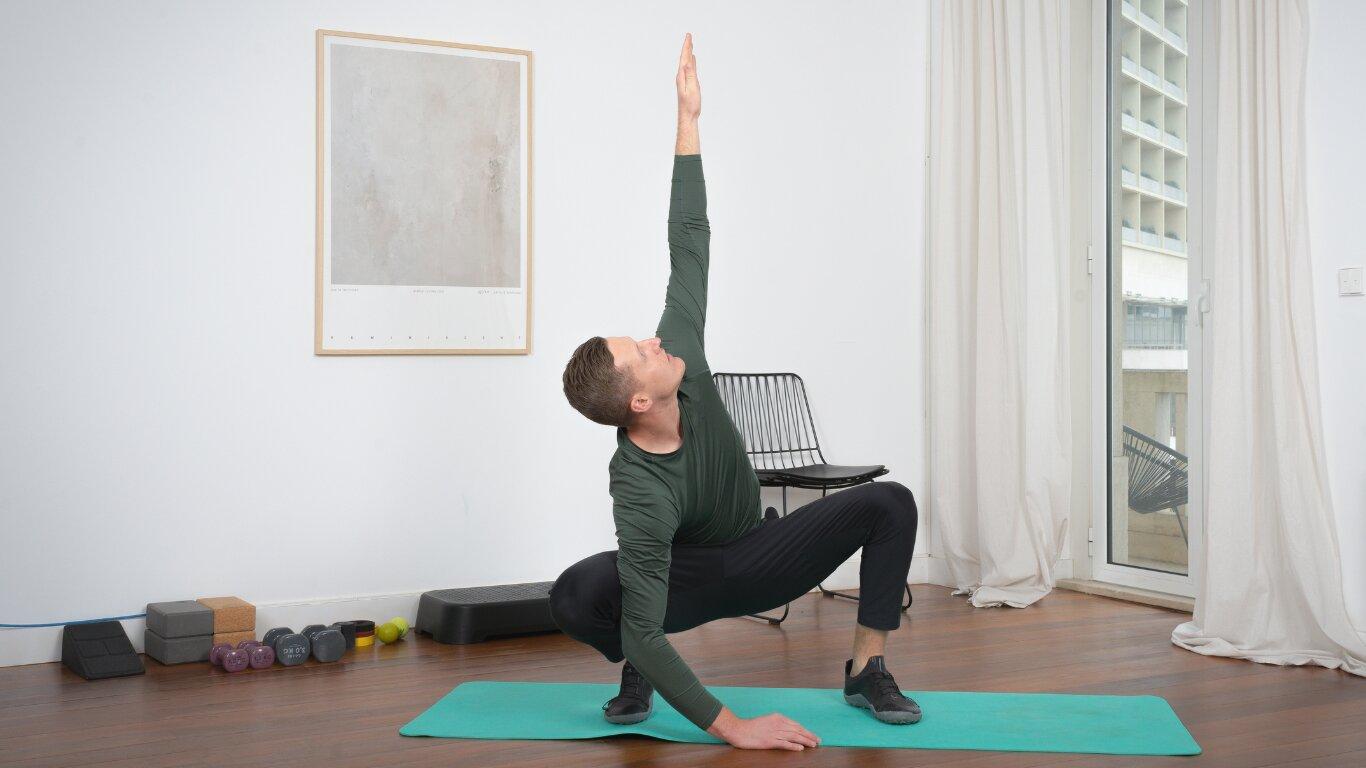
In shortA stiff neck at a desk is often an upper back problem in disguise. Hours of arms-forward, eyes-on-screen work leave the upper back and chest still, so the neck ends up doing the turning and holding for them. Get the upper back and shoulders moving again and the neck usually has less to do.
You notice it around four in the afternoon. Turning your head to answer a colleague feels like turning a rusty tap. You roll your shoulders, squeeze the back of your neck, and go back to the screen. Tomorrow, same thing.
Most people treat that feeling where they feel it: the neck. Rub it, stretch it, crack it. It helps for ten minutes. Here's why it rarely lasts, and what to do instead.
What a desk day does to the top half of you
Look at how you're sitting right now. Arms forward on a keyboard or phone. Eyes on one fixed point. Head drifted a little toward the screen. Upper back rounded and still. You can hold that shape for hours without noticing, because nothing about it hurts in the moment.
The problem isn't one bad posture. There is no perfect posture. The problem is that it's the same posture, all day. Your body adapts to what you do most. Keep your upper back still for eight hours a day, five days a week, and it gets very good at being still.
Why the neck takes the hit
Your neck and upper back are meant to share the work. When you look over your shoulder, part of that turn should come from the ribs and upper back. When you reach overhead, the shoulder blades should glide and the upper back should extend a little.
When the upper back stops contributing, the neck makes up the difference. It turns further, holds longer, and carries your head with less help. That's often why the neck feels tight and tired even though nothing is wrong with it. It's overworked, not broken.
Test it in 30 seconds
Before you change anything, find out where you stand. That's always the first step in how we teach: test first, so you have something to compare against.
- 01Neck turn: sit tall and turn your head to the right as far as is comfortable. Note where your chin ends up compared to your shoulder. Repeat to the left. Is one side shorter?
- 02Overhead reach: stand with your back against a wall, feet a small step forward. Raise both arms overhead, thumbs leading. Can your thumbs touch the wall without your lower back arching away from it?
Remember what you found. You'll check again in five minutes.
Free the upper back, then teach the shoulders to hold it
These four drills come from Session 01 of Head to Toe, our free live series. Do them in this order. The whole thing takes about five minutes at your desk.
- 01Chin tucks, 10 slow reps with a 3-second hold. Make a double chin and glide your head straight back, eyes level. Don't tip your head down to fake it.
- 02Chair-back extension, 8 reps. Hands behind your head, elbows wide, arch your upper back over the top of the backrest. Keep your neck in line with your upper back instead of cranking it backwards.
- 03Doorway chest stretch, 30 seconds each side. Hand on the door frame at shoulder height, arm long, step through gently until you feel it across the chest. If your hand starts to tingle, ease off.
- 04Wall slides, 10 reps. Face the wall, forearms on it at shoulder height. Slide your arms up while keeping your ribs down and your shoulders away from your ears.
Notice the order. The first three open things up. The last one asks your shoulders to work in that new range. That second part is what most stretching routines skip, and it's the part that makes a change last.
Now retest
Go back to the neck turn and the overhead reach. Most people find their chin gets a little closer to the shoulder, or their thumbs get closer to the wall. Some don't, and that's useful information too.
A same-day change shows you what's possible. Whether it sticks depends on the rest of your week. Run the four drills once a day, tied to something you already do, like right after your first coffee, and test again in seven days.
When to get it checked
Stiffness from sitting is common and usually responds well to movement. Sharp or pinching pain, numbness, tingling down the arm, headaches that keep coming back, or dizziness are different. Stop, and see a qualified clinician. Move More Human teaches movement, not medicine.
Common questions
- Why does my neck feel worse at the end of the workday?
- Usually because of time, not one bad position. Hours in the same arms-forward position leave the upper back still and the neck carrying more of the load. Moving more often, and getting the upper back involved again, tends to help more than chasing a perfect posture.
- Is there a correct posture for desk work?
- Not really. The best posture is your next one. Change position often, stand up between calls, and take your upper back and shoulders through their full range a few times a day.
- How long until I notice a difference?
- Many people feel a difference straight after the drills. Lasting change usually takes a few weeks of doing them most days. Retest after seven days to see what has stuck.
By Daniël Stegehuis
Move with us,
live and free.
Head to Toe: three free live sessions on Zoom, one body region at a time.
/ Head to Toe: free live series
- Sat 28 NovBuild Your Foundation
15:00 Amsterdam / 9:00 New York / 60 min / Live on Zoom / Free
Pick one session or all three
You get the Zoom links by email, plus a PDF guide after each session. Want occasional movement tips too? Tick the box on the form.
More / From the Journal

How to Check Your Own Mobility at Home (a 10-Minute Self-Test)
Six simple checks, head to toe, with a wall, a chair and a tape measure. What each one tells you, what it doesn't, and how to retest so you see real change.
Nov 20, 2026

How to Fix Rounded Shoulders From Sitting at a Desk
Rounded shoulders from desk work can change. What the research shows, a simple floor test, and a short routine to open the chest and strengthen the upper back.
Nov 19, 2026